Troll Bridge
An acclaimed fantasy adaptation combining live-action filmmaking, practical effects, animation, and visual effects.
Released
Fantasy
Film
Project Overview
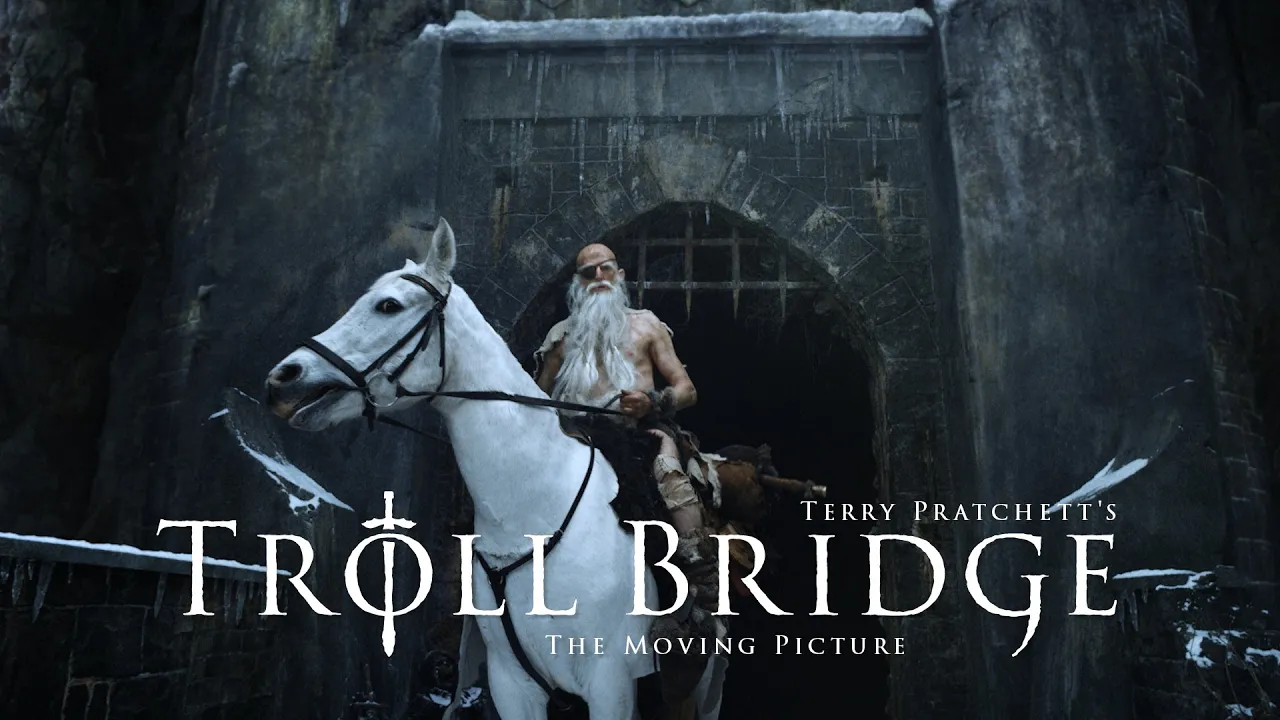
Troll Bridge is a live-action adaptation of Terry Pratchett's beloved Discworld story, directed by Daniel Knight and produced by Snowgum Films. What began as an independent fantasy production evolved into a global creative effort spanning more than a decade, bringing together artists, filmmakers, animators, and visual effects professionals united by a shared passion for the source material.
As a VFX Compositor, I contributed to the post-production process during a project that was remarkable not only for its visual ambition but for the sheer dedication required to bring it to completion. The final film comprised more than 500 VFX shots, creature work, fully digital environments, crowd sequences, and a talking horse. The film stands as a testament to what can be achieved when hundreds of artists collectively invest their time, talent, and expertise into a shared creative vision.
A Decade in the Making
Keeping years of work from dozens of artists looking like it all came from the same place.
Troll Bridge wasn't made on a traditional schedule. Artists joined and contributed over years, meaning assets, creative decisions, and rendered elements passed through many hands before reaching the compositing stage. Consistency was a constant challenge, material arriving from different sources, with varying lighting, colour, and texture, all needed to cut together seamlessly in the final film.
My job as a compositor meant not just integrating individual shots, but ensuring that a character or environment looked the same from scene to scene regardless of who had created it or when. That required careful referencing, colour matching, and a close eye for continuity, habits I now carry into every project I work on.




Making the Troll Believable
Making a fully digital character feel physically present alongside a live-action actor.
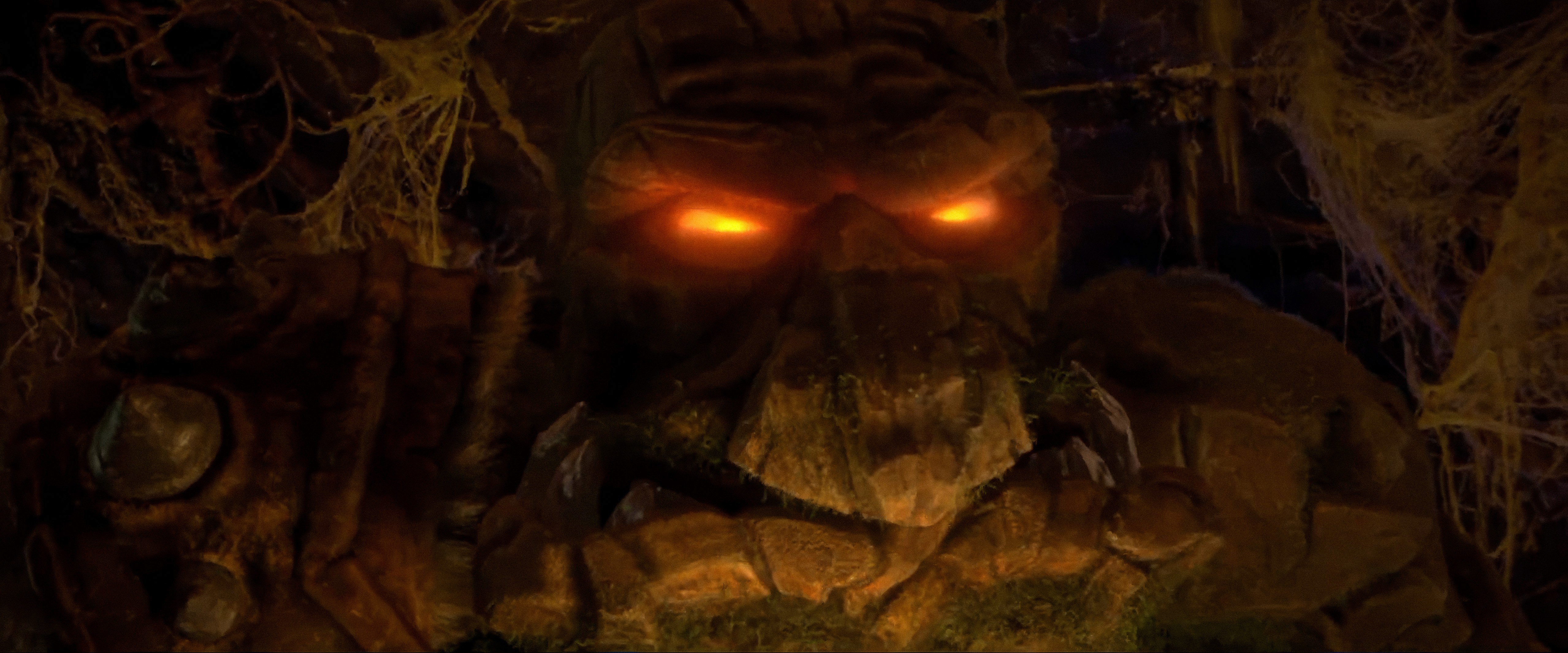
The film's central character, Micah, a bulky, fur-covered troll, existed entirely as a computer-generated creation. The challenge was making him feel like he genuinely occupied the same space as the real actor standing next to him.
That meant carefully managing how light fell across his body, how his shadow landed on the ground, and how atmospheric depth made him feel as if he were breathing the same air as everything around him. Fur was particularly tricky; CG hair can easily look too clean and synthetic against real film footage. Matching the texture and grain of the original footage and layering it onto the troll was one of the unsung but more important parts of the work. In shots where he shared the frame with the actor, small adjustments, like ensuring his shadow fell correctly behind the person standing in front of him, made the difference between something that reads as real and something that doesn't.

Making a Horse Talk
Blending a digital mouth onto a real animal, frame by frame, with no room for error.
Beryl the talking horse was filmed practically, with the speech achieved by placing an animated digital mouth over the real animal's face in post. It sounds simple in concept, but in practice, it was one of the most demanding shots on the project.
The transition between real fur and a rendered surface is unforgiving. Any colour difference, any softness mismatch at the edge, and the eye goes straight to it. Getting it to hold meant careful blending at every boundary, painting in stray hairs, matching how light caught the surface, and ensuring the digital mouth moved with exactly the right amount of blur to match the camera. Even a single pixel of drift in the tracking, and the illusion was gone. These were shots with very little margin for error, and the reward was that most audiences never registered the work at all.


Building a World in Post
Turning a modest physical set into a vast fantasy landscape, entirely in post.
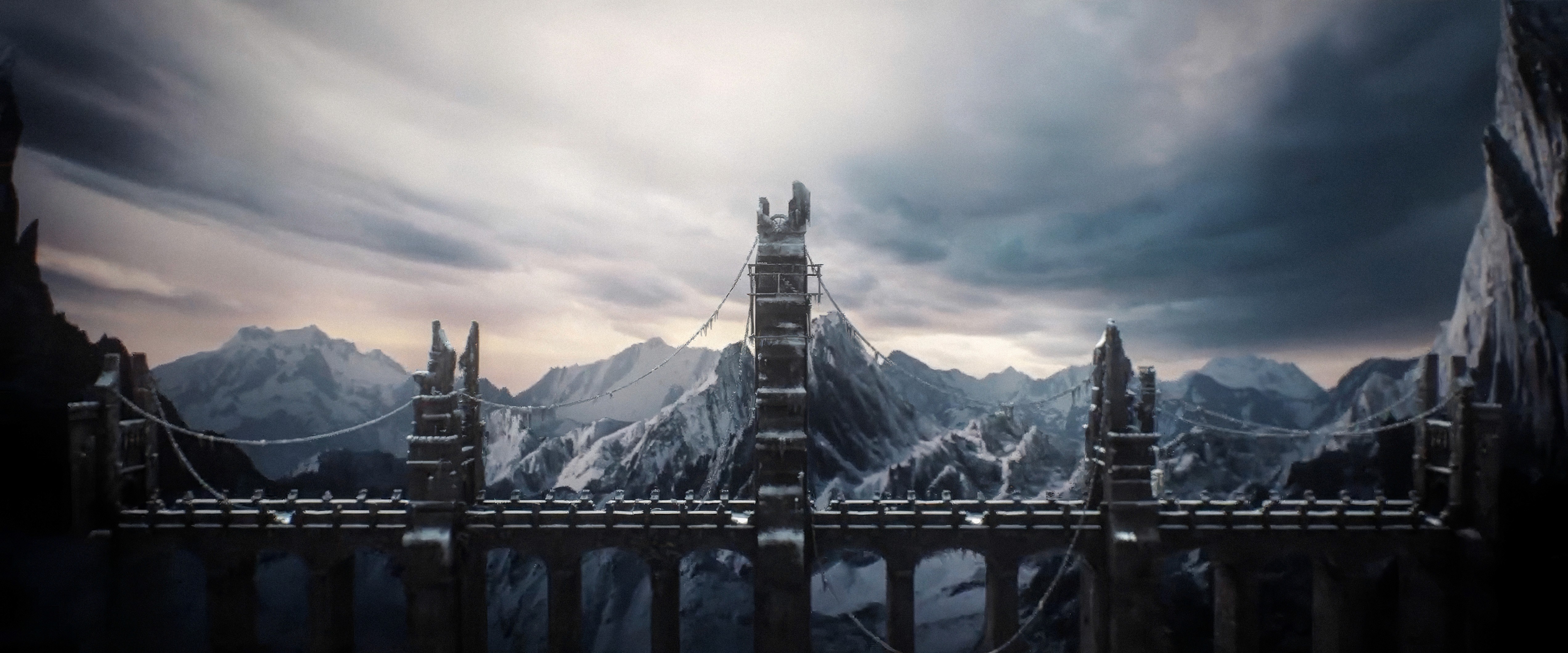
Beyond the immediate set, almost everything in the film's world was built digitally. The physical location was modest, the distant mountains, snow, forests, and much of the bridge structure itself were created or extended in post through a combination of 3D renders and hand-painted environments.
The compositing challenge was making all of it feel like a single, continuous place. Depth and atmosphere were managed so that elements further back in the scene naturally faded into the environment. Snow was added as a layered element rather than an afterthought, drifting past foreground subjects to give shots a sense of shared physical space. The trickiest part was colour, the live footage was lit with warm studio lights, while the digital environments had a colder, more natural tone. Reconciling those two things convincingly across hundreds of shots was one heck of a challenge.

What the Film Taught Me
What 500 VFX shots, a global team of artists, and a decade of production taught me.
Troll Bridge reinforced something I've come to believe strongly: the best compositing is the work audiences never notice. Every decision existed to serve the story, not to demonstrate technique. When the troll simply felt present, when the horse simply felt like it was speaking, the work had done its job.
Practically, the project sharpened skills I use constantly, managing complex layered pipelines, maintaining visual consistency across material from many different sources, and finding workable solutions under real constraints. Render time was limited, revisions weren't always possible, and the work still needed to hold up on screen. That kind of pressure builds good instincts. It also gave me a genuine appreciation for how much of a film's final image lives in the compositing stage, and how much responsibility that carries.


Credits
Director
Daniel Knight
Production
Snowgum Films
Role
VFX Compositor
Based on
Troll Bridge by Terry Pratchett
Learn More
For complete production information, cast, crew credits, awards, and additional details about the film, please visit the official IMDb page.
More Works
©2026


Troll Bridge
An acclaimed fantasy adaptation combining live-action filmmaking, practical effects, animation, and visual effects.
Released
Fantasy
Film
Project Overview
Troll Bridge is a live-action adaptation of Terry Pratchett's beloved Discworld story, directed by Daniel Knight and produced by Snowgum Films. What began as an independent fantasy production evolved into a global creative effort spanning more than a decade, bringing together artists, filmmakers, animators, and visual effects professionals united by a shared passion for the source material.
As a VFX Compositor, I contributed to the post-production process during a project that was remarkable not only for its visual ambition but for the sheer dedication required to bring it to completion. The final film comprised more than 500 VFX shots, creature work, fully digital environments, crowd sequences, and a talking horse. The film stands as a testament to what can be achieved when hundreds of artists collectively invest their time, talent, and expertise into a shared creative vision.
A Decade in the Making
Keeping years of work from dozens of artists looking like it all came from the same place.
Troll Bridge wasn't made on a traditional schedule. Artists joined and contributed over years, meaning assets, creative decisions, and rendered elements passed through many hands before reaching the compositing stage. Consistency was a constant challenge, material arriving from different sources, with varying lighting, colour, and texture, all needed to cut together seamlessly in the final film.
My job as a compositor meant not just integrating individual shots, but ensuring that a character or environment looked the same from scene to scene regardless of who had created it or when. That required careful referencing, colour matching, and a close eye for continuity, habits I now carry into every project I work on.
Making the Troll Believable
Making a fully digital character feel physically present alongside a live-action actor.
The film's central character, Micah, a bulky, fur-covered troll, existed entirely as a computer-generated creation. The challenge was making him feel like he genuinely occupied the same space as the real actor standing next to him.
That meant carefully managing how light fell across his body, how his shadow landed on the ground, and how atmospheric depth made him feel as if he were breathing the same air as everything around him. Fur was particularly tricky; CG hair can easily look too clean and synthetic against real film footage. Matching the texture and grain of the original footage and layering it onto the troll was one of the unsung but more important parts of the work. In shots where he shared the frame with the actor, small adjustments, like ensuring his shadow fell correctly behind the person standing in front of him, made the difference between something that reads as real and something that doesn't.
Making a Horse Talk
Blending a digital mouth onto a real animal, frame by frame, with no room for error.
Beryl the talking horse was filmed practically, with the speech achieved by placing an animated digital mouth over the real animal's face in post. It sounds simple in concept, but in practice, it was one of the most demanding shots on the project.
The transition between real fur and a rendered surface is unforgiving. Any colour difference, any softness mismatch at the edge, and the eye goes straight to it. Getting it to hold meant careful blending at every boundary, painting in stray hairs, matching how light caught the surface, and ensuring the digital mouth moved with exactly the right amount of blur to match the camera. Even a single pixel of drift in the tracking, and the illusion was gone. These were shots with very little margin for error, and the reward was that most audiences never registered the work at all.
Building a World in Post
Turning a modest physical set into a vast fantasy landscape, entirely in post.
Beyond the immediate set, almost everything in the film's world was built digitally. The physical location was modest, the distant mountains, snow, forests, and much of the bridge structure itself were created or extended in post through a combination of 3D renders and hand-painted environments.
The compositing challenge was making all of it feel like a single, continuous place. Depth and atmosphere were managed so that elements further back in the scene naturally faded into the environment. Snow was added as a layered element rather than an afterthought, drifting past foreground subjects to give shots a sense of shared physical space. The trickiest part was colour, the live footage was lit with warm studio lights, while the digital environments had a colder, more natural tone. Reconciling those two things convincingly across hundreds of shots was one heck of a challenge.
What the Film Taught Me
What 500 VFX shots, a global team of artists, and a decade of production taught me.
Troll Bridge reinforced something I've come to believe strongly: the best compositing is the work audiences never notice. Every decision existed to serve the story, not to demonstrate technique. When the troll simply felt present, when the horse simply felt like it was speaking, the work had done its job.
Practically, the project sharpened skills I use constantly, managing complex layered pipelines, maintaining visual consistency across material from many different sources, and finding workable solutions under real constraints. Render time was limited, revisions weren't always possible, and the work still needed to hold up on screen. That kind of pressure builds good instincts. It also gave me a genuine appreciation for how much of a film's final image lives in the compositing stage, and how much responsibility that carries.
Credits
Director
Daniel Knight
Production
Snowgum Films
Role
VFX Compositor
Based on
Troll Bridge by Terry Pratchett
Learn More
For complete production information, cast, crew credits, awards, and additional details about the film, please visit the official IMDb page.
More Works
©2026

Troll Bridge
An acclaimed fantasy adaptation combining live-action filmmaking, practical effects, animation, and visual effects.
Released
Fantasy
Film
Project Overview
Troll Bridge is a live-action adaptation of Terry Pratchett's beloved Discworld story, directed by Daniel Knight and produced by Snowgum Films. What began as an independent fantasy production evolved into a global creative effort spanning more than a decade, bringing together artists, filmmakers, animators, and visual effects professionals united by a shared passion for the source material.
As a VFX Compositor, I contributed to the post-production process during a project that was remarkable not only for its visual ambition but for the sheer dedication required to bring it to completion. The final film comprised more than 500 VFX shots, creature work, fully digital environments, crowd sequences, and a talking horse. The film stands as a testament to what can be achieved when hundreds of artists collectively invest their time, talent, and expertise into a shared creative vision.
A Decade in the Making
Keeping years of work from dozens of artists looking like it all came from the same place.
Troll Bridge wasn't made on a traditional schedule. Artists joined and contributed over years, meaning assets, creative decisions, and rendered elements passed through many hands before reaching the compositing stage. Consistency was a constant challenge, material arriving from different sources, with varying lighting, colour, and texture, all needed to cut together seamlessly in the final film.
My job as a compositor meant not just integrating individual shots, but ensuring that a character or environment looked the same from scene to scene regardless of who had created it or when. That required careful referencing, colour matching, and a close eye for continuity, habits I now carry into every project I work on.
Making the Troll Believable
Making a fully digital character feel physically present alongside a live-action actor.
The film's central character, Micah, a bulky, fur-covered troll, existed entirely as a computer-generated creation. The challenge was making him feel like he genuinely occupied the same space as the real actor standing next to him.
That meant carefully managing how light fell across his body, how his shadow landed on the ground, and how atmospheric depth made him feel as if he were breathing the same air as everything around him. Fur was particularly tricky; CG hair can easily look too clean and synthetic against real film footage. Matching the texture and grain of the original footage and layering it onto the troll was one of the unsung but more important parts of the work. In shots where he shared the frame with the actor, small adjustments, like ensuring his shadow fell correctly behind the person standing in front of him, made the difference between something that reads as real and something that doesn't.
Making a Horse Talk
Blending a digital mouth onto a real animal, frame by frame, with no room for error.
Beryl the talking horse was filmed practically, with the speech achieved by placing an animated digital mouth over the real animal's face in post. It sounds simple in concept, but in practice, it was one of the most demanding shots on the project.
The transition between real fur and a rendered surface is unforgiving. Any colour difference, any softness mismatch at the edge, and the eye goes straight to it. Getting it to hold meant careful blending at every boundary, painting in stray hairs, matching how light caught the surface, and ensuring the digital mouth moved with exactly the right amount of blur to match the camera. Even a single pixel of drift in the tracking, and the illusion was gone. These were shots with very little margin for error, and the reward was that most audiences never registered the work at all.
Building a World in Post
Turning a modest physical set into a vast fantasy landscape, entirely in post.
Beyond the immediate set, almost everything in the film's world was built digitally. The physical location was modest, the distant mountains, snow, forests, and much of the bridge structure itself were created or extended in post through a combination of 3D renders and hand-painted environments.
The compositing challenge was making all of it feel like a single, continuous place. Depth and atmosphere were managed so that elements further back in the scene naturally faded into the environment. Snow was added as a layered element rather than an afterthought, drifting past foreground subjects to give shots a sense of shared physical space. The trickiest part was colour, the live footage was lit with warm studio lights, while the digital environments had a colder, more natural tone. Reconciling those two things convincingly across hundreds of shots was one heck of a challenge.
What the Film Taught Me
What 500 VFX shots, a global team of artists, and a decade of production taught me.
Troll Bridge reinforced something I've come to believe strongly: the best compositing is the work audiences never notice. Every decision existed to serve the story, not to demonstrate technique. When the troll simply felt present, when the horse simply felt like it was speaking, the work had done its job.
Practically, the project sharpened skills I use constantly, managing complex layered pipelines, maintaining visual consistency across material from many different sources, and finding workable solutions under real constraints. Render time was limited, revisions weren't always possible, and the work still needed to hold up on screen. That kind of pressure builds good instincts. It also gave me a genuine appreciation for how much of a film's final image lives in the compositing stage, and how much responsibility that carries.
Credits
Director
Daniel Knight
Production
Snowgum Films
Role
VFX Compositor
Based on
Troll Bridge by Terry Pratchett
Learn More
For complete production information, cast, crew credits, awards, and additional details about the film, please visit the official IMDb page.
More Works
©2026
