
Sindbad The Fifth Voyage
A fantasy adventure inspired by the timeless magic of Ray Harryhausen, combining stop-motion creature animation and live-action filmmaking to bring mythical creatures, ancient kingdoms, and legendary quests to life.
Released
Stop Motion
Film
Project Overview
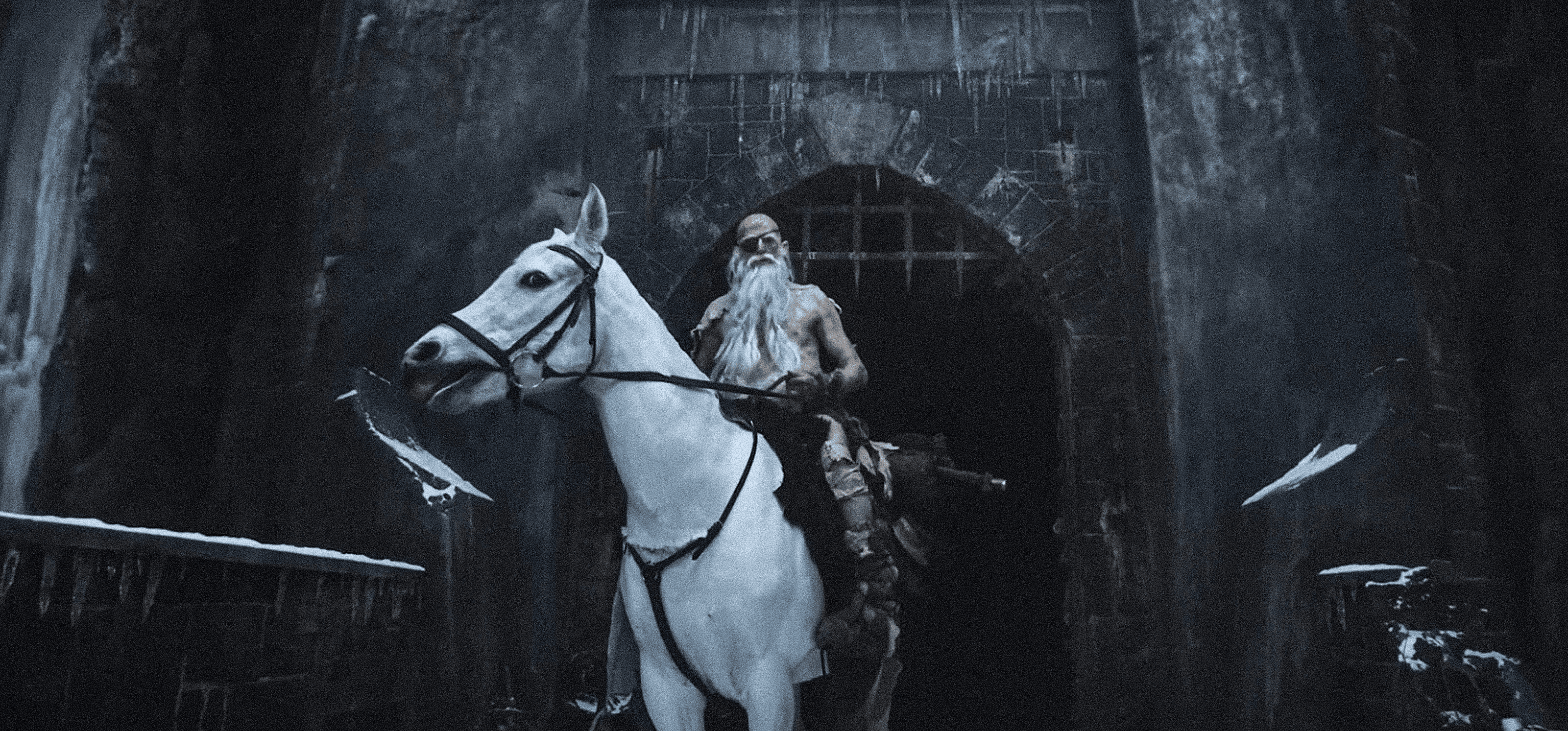
Sindbad: The Fifth Voyage is an independent fantasy adventure written, directed by, and starring Shahin Sean Solimon by Giant Flick Films. Released in 2014 with narration by the legendary Patrick Stewart, the film follows Sindbad on a quest to rescue a sultan's daughter from an evil sorcerer, battling mythical creatures across the desert, sea, and ruined temples along the way. Its central creative ambition was a deliberate homage to the Ray Harryhausen era of stop-motion fantasy, blending live-action drama with hand-animated puppet creatures in the tradition of the classic adventure films of the 1950s and 60s that inspired it.
Inspired by the classic fantasy adventures that defined a generation of classic stop-motion cinema, Sindbad: The Fifth Voyage presented a unique opportunity for Senior VFX work to help recreate the spirit of old-school cinematic spectacle through modern visual effects techniques. I joined the production as a Lead VFX Compositor, with my responsibilities extending beyond compositing into broader VFX work across the production. Alongside leading the compositing effort, I oversaw ocean simulations and personally built atmospheric effects, fire, smoke, magic, and particle systems across a significant portion of the film's visual effects work.

A Tribute Built on Constraints
What it meant creatively to chase the feeling of handmade cinema on an independent budget.
From the outset, the director was clear about the aesthetic he was chasing. The goal was not to compete with modern visual effects, but to recreate the feeling of a classic matinee fantasy, handmade in spirit if not always in method. That framing shaped every VFX decision on the project. Rather than pursuing photorealism, the team leaned into a stylised, raw, storybook quality that was intentional rather than a product of limitation.
In practice, this meant working with stop-motion puppet sequences delivered as frame-by-frame image files, filmed separately from the live-action plates by a dedicated team of specialist animators. The VFX task was to place those creatures into the world of the film, shot by shot, while keeping everything feeling coherent and of a piece. The production was built over several years with a globally distributed team of artists, which introduced its own challenges around consistency, communication, and continuity. Keeping the look of the film unified across that span of time and that many contributors was as much a part of the job as the effects work itself.


Compositing Stop-Motion Into Reality
Placing hand-animated puppet creatures into live-action plates, frame by frame.
The film's creatures, a Cyclops, a towering crab, skeleton warriors, and more, were all animated as physical puppets one frame at a time by a dedicated team of stop-motion specialists. The compositing task was to take those sequences and make them feel at home in the same world as the live actors, but still keep that raw retro finish as old cinema.
The core challenge was matching. A puppet filmed against a neutral background in a controlled environment carries none of the lighting, atmosphere, or depth of the scene it needs to inhabit. Getting it to sit convincingly meant studying the live plate carefully, how light fell, where shadows landed, what the colour temperature was, and then working backwards to bring the creature into that space. Motion blur was added to puppet frames to soften their inherent sharpness and match the natural movement of the camera. Shadows were created or painted into anchor creatures to the ground beneath them. Colour was adjusted shot by shot, since a sun-bleached desert scene and a torchlit cave demanded very different treatments of the same puppet. Actor eyelines were critical throughout. If Sindbad looked even slightly off from where the skeleton was supposed to be standing, the entire illusion collapsed.

Painting the World
Blending Fiction, Archive & Docu
Extending sets and building environments that existed only partially on the day of filming.
Many of the film's locations were only partially built on set. A handful of stone props would stand in for a grand temple. A stretch of real sand needed to become a vast desert stretching to the horizon. The practical sets gave the actors somewhere to perform, but the world around them was built in post.
Matte paintings extended the edges of what existed into something larger and more convincing. Palace halls gained distant columns and atmospheric depth. Desert horizons pushed further than the original footage could reach. Ruined temple sequences had cliff faces and torchlit recesses added beyond the set's actual boundaries. The craft in this work was making the joins invisible, ensuring that the painted and extended portions carried the same quality of light and atmosphere as the plate they connected to. Distance haze was used to naturally separate foreground from background and give each environment a sense of real scale. Where filming had taken place across different days or in different conditions, grading helped pull everything into a consistent reading so the world felt continuous.


Simulating the Elements
Supervising the ocean work and personally building the fire, smoke, and magic effects across the film.
A significant portion of the film takes place at sea, and the ocean itself carries as much storytelling weight as anything else in the frame. I oversaw the simulation work that brought those sequences to life, working with the artists generating the water while ensuring that what landed in the composite matched the scale, colour, and mood of each scene. Getting the horizon to sit correctly, keeping wave movement consistent across cuts, and making sure the sea felt like it belonged in the same world as the actors on deck were all ongoing concerns across the water sequences.
Beyond the ocean work, I personally built fire, smoke, magic, and particle effects across a large portion of the film. Ship deck fires and practical elements were enhanced digitally, adding volume and intensity that the on-set elements alone couldn't sustain on camera. Magical effects, including the genie lamp smoke and the various supernatural moments woven throughout the story, were built as layered particle composites, animated glows, and painted light. The approach across all of it was to honour the film's handmade aesthetic rather than push toward something that might feel out of place alongside stop-motion puppets and hand-painted environments. A fire that felt organic, or a magic effect with a slightly imperfect quality, served the film far better than anything too polished or technically precise.

Honoring a Legacy
What a stop-motion tribute film, a global team, and years of production taught me about preserving traditional artistry through modern visual effects.
Sindbad: The Fifth Voyage reinforced something that is easy to lose sight of on technically demanding work: effects exist to serve a feeling, not to demonstrate what is possible. Every decision on this project, whether to add motion blur to a skeleton, how far to push an environment in a matte painting, or how organic to make a magical glow, was ultimately a decision about whether the audience would stay inside this classic retro story.
Working across compositing, matte painting, and simulations on the same project gave me a broader view of how those disciplines talk to each other. An environment extension only works if the simulation sitting in front of it feels like it belongs there. A magic effect only lands if the composite beneath it is already doing its job. Understanding how each piece affected the others made me a more complete artist across all three areas.
The project also reinforced the value of creative commitment under constraint. This was a production built on a constraint visual look and a very deliberate vision, and those two things in combination demanded that every choice be intentional. When you cannot solve something with technology or time, you learn to solve it with craft.

Credits
Director
Shahin Sean Solimon
Production
Giant Flick Films
Role
Lead VFX Compositor & Visual Effects Artist
Additional Responsibilities
Visual Effects Development
Supervising Ocean Simulations
Fire, Smoke & Atmospheric Effects
Magic & Particle Effects
Genre
Fantasy Adventure Feature Film
Learn More
For complete production information, cast, crew credits, awards, and additional details about the film, please visit the official IMDb page.
More Works
©2026


Sindbad The Fifth Voyage
A fantasy adventure inspired by the timeless magic of Ray Harryhausen, combining stop-motion creature animation and live-action filmmaking to bring mythical creatures, ancient kingdoms, and legendary quests to life.
Released
Stop Motion
Film
Project Overview
Sindbad: The Fifth Voyage is an independent fantasy adventure written, directed by, and starring Shahin Sean Solimon by Giant Flick Films. Released in 2014 with narration by the legendary Patrick Stewart, the film follows Sindbad on a quest to rescue a sultan's daughter from an evil sorcerer, battling mythical creatures across the desert, sea, and ruined temples along the way. Its central creative ambition was a deliberate homage to the Ray Harryhausen era of stop-motion fantasy, blending live-action drama with hand-animated puppet creatures in the tradition of the classic adventure films of the 1950s and 60s that inspired it.
Inspired by the classic fantasy adventures that defined a generation of classic stop-motion cinema, Sindbad: The Fifth Voyage presented a unique opportunity for Senior VFX work to help recreate the spirit of old-school cinematic spectacle through modern visual effects techniques. I joined the production as a Lead VFX Compositor, with my responsibilities extending beyond compositing into broader VFX work across the production. Alongside leading the compositing effort, I oversaw ocean simulations and personally built atmospheric effects, fire, smoke, magic, and particle systems across a significant portion of the film's visual effects work.
A Tribute Built on Constraints
What it meant creatively to chase the feeling of handmade cinema on an independent budget.
From the outset, the director was clear about the aesthetic he was chasing. The goal was not to compete with modern visual effects, but to recreate the feeling of a classic matinee fantasy, handmade in spirit if not always in method. That framing shaped every VFX decision on the project. Rather than pursuing photorealism, the team leaned into a stylised, raw, storybook quality that was intentional rather than a product of limitation.
In practice, this meant working with stop-motion puppet sequences delivered as frame-by-frame image files, filmed separately from the live-action plates by a dedicated team of specialist animators. The VFX task was to place those creatures into the world of the film, shot by shot, while keeping everything feeling coherent and of a piece. The production was built over several years with a globally distributed team of artists, which introduced its own challenges around consistency, communication, and continuity. Keeping the look of the film unified across that span of time and that many contributors was as much a part of the job as the effects work itself.
Compositing Stop-Motion Into Reality
Placing hand-animated puppet creatures into live-action plates, frame by frame.
The film's creatures, a Cyclops, a towering crab, skeleton warriors, and more, were all animated as physical puppets one frame at a time by a dedicated team of stop-motion specialists. The compositing task was to take those sequences and make them feel at home in the same world as the live actors, but still keep that raw retro finish as old cinema.
The core challenge was matching. A puppet filmed against a neutral background in a controlled environment carries none of the lighting, atmosphere, or depth of the scene it needs to inhabit. Getting it to sit convincingly meant studying the live plate carefully, how light fell, where shadows landed, what the colour temperature was, and then working backwards to bring the creature into that space. Motion blur was added to puppet frames to soften their inherent sharpness and match the natural movement of the camera. Shadows were created or painted into anchor creatures to the ground beneath them. Colour was adjusted shot by shot, since a sun-bleached desert scene and a torchlit cave demanded very different treatments of the same puppet. Actor eyelines were critical throughout. If Sindbad looked even slightly off from where the skeleton was supposed to be standing, the entire illusion collapsed.
Painting the World
Extending sets and building environments that existed only partially on the day of filming.
Many of the film's locations were only partially built on set. A handful of stone props would stand in for a grand temple. A stretch of real sand needed to become a vast desert stretching to the horizon. The practical sets gave the actors somewhere to perform, but the world around them was built in post.
Matte paintings extended the edges of what existed into something larger and more convincing. Palace halls gained distant columns and atmospheric depth. Desert horizons pushed further than the original footage could reach. Ruined temple sequences had cliff faces and torchlit recesses added beyond the set's actual boundaries. The craft in this work was making the joins invisible, ensuring that the painted and extended portions carried the same quality of light and atmosphere as the plate they connected to. Distance haze was used to naturally separate foreground from background and give each environment a sense of real scale. Where filming had taken place across different days or in different conditions, grading helped pull everything into a consistent reading so the world felt continuous.
Simulating the Elements
Supervising the ocean work and personally building the fire, smoke, and magic effects across the film.
A significant portion of the film takes place at sea, and the ocean itself carries as much storytelling weight as anything else in the frame. I oversaw the simulation work that brought those sequences to life, working with the artists generating the water while ensuring that what landed in the composite matched the scale, colour, and mood of each scene. Getting the horizon to sit correctly, keeping wave movement consistent across cuts, and making sure the sea felt like it belonged in the same world as the actors on deck were all ongoing concerns across the water sequences.
Beyond the ocean work, I personally built fire, smoke, magic, and particle effects across a large portion of the film. Ship deck fires and practical elements were enhanced digitally, adding volume and intensity that the on-set elements alone couldn't sustain on camera. Magical effects, including the genie lamp smoke and the various supernatural moments woven throughout the story, were built as layered particle composites, animated glows, and painted light. The approach across all of it was to honour the film's handmade aesthetic rather than push toward something that might feel out of place alongside stop-motion puppets and hand-painted environments. A fire that felt organic, or a magic effect with a slightly imperfect quality, served the film far better than anything too polished or technically precise.
Honoring a Legacy
What a stop-motion tribute film, a global team, and years of production taught me about preserving traditional artistry through modern visual effects.
Sindbad: The Fifth Voyage reinforced something that is easy to lose sight of on technically demanding work: effects exist to serve a feeling, not to demonstrate what is possible. Every decision on this project, whether to add motion blur to a skeleton, how far to push an environment in a matte painting, or how organic to make a magical glow, was ultimately a decision about whether the audience would stay inside this classic retro story.
Working across compositing, matte painting, and simulations on the same project gave me a broader view of how those disciplines talk to each other. An environment extension only works if the simulation sitting in front of it feels like it belongs there. A magic effect only lands if the composite beneath it is already doing its job. Understanding how each piece affected the others made me a more complete artist across all three areas.
The project also reinforced the value of creative commitment under constraint. This was a production built on a constraint visual look and a very deliberate vision, and those two things in combination demanded that every choice be intentional. When you cannot solve something with technology or time, you learn to solve it with craft.
Credits
Director
Shahin Sean Solimon
Production
Giant Flick Films
Role
Lead VFX Compositor & Visual Effects Artist
Additional Responsibilities
Visual Effects Development
Supervising Ocean Simulations
Fire, Smoke & Atmospheric Effects
Magic & Particle Effects
Genre
Fantasy Adventure Feature Film
Learn More
For complete production information, cast, crew credits, awards, and additional details about the film, please visit the official IMDb page.
More Works
©2026
Sindbad The
Fifth Voyage
A fantasy adventure inspired by the timeless magic of Ray Harryhausen, combining stop-motion creature animation and live-action filmmaking to bring mythical creatures, ancient kingdoms, and legendary quests to life.
Released
Stop Motion
Film
Project Overview
Sindbad: The Fifth Voyage is an independent fantasy adventure written, directed by, and starring Shahin Sean Solimon by Giant Flick Films. Released in 2014 with narration by the legendary Patrick Stewart, the film follows Sindbad on a quest to rescue a sultan's daughter from an evil sorcerer, battling mythical creatures across the desert, sea, and ruined temples along the way. Its central creative ambition was a deliberate homage to the Ray Harryhausen era of stop-motion fantasy, blending live-action drama with hand-animated puppet creatures in the tradition of the classic adventure films of the 1950s and 60s that inspired it.
Inspired by the classic fantasy adventures that defined a generation of classic stop-motion cinema, Sindbad: The Fifth Voyage presented a unique opportunity for Senior VFX work to help recreate the spirit of old-school cinematic spectacle through modern visual effects techniques. I joined the production as a Lead VFX Compositor, with my responsibilities extending beyond compositing into broader VFX work across the production. Alongside leading the compositing effort, I oversaw ocean simulations and personally built atmospheric effects, fire, smoke, magic, and particle systems across a significant portion of the film's visual effects work.
A Tribute Built on Constraints
What it meant creatively to chase the feeling of handmade cinema on an independent budget.
From the outset, the director was clear about the aesthetic he was chasing. The goal was not to compete with modern visual effects, but to recreate the feeling of a classic matinee fantasy, handmade in spirit if not always in method. That framing shaped every VFX decision on the project. Rather than pursuing photorealism, the team leaned into a stylised, raw, storybook quality that was intentional rather than a product of limitation.
In practice, this meant working with stop-motion puppet sequences delivered as frame-by-frame image files, filmed separately from the live-action plates by a dedicated team of specialist animators. The VFX task was to place those creatures into the world of the film, shot by shot, while keeping everything feeling coherent and of a piece. The production was built over several years with a globally distributed team of artists, which introduced its own challenges around consistency, communication, and continuity. Keeping the look of the film unified across that span of time and that many contributors was as much a part of the job as the effects work itself.
Compositing Stop-Motion Into Reality
Placing hand-animated puppet creatures into live-action plates, frame by frame.
The film's creatures, a Cyclops, a towering crab, skeleton warriors, and more, were all animated as physical puppets one frame at a time by a dedicated team of stop-motion specialists. The compositing task was to take those sequences and make them feel at home in the same world as the live actors, but still keep that raw retro finish as old cinema.
The core challenge was matching. A puppet filmed against a neutral background in a controlled environment carries none of the lighting, atmosphere, or depth of the scene it needs to inhabit. Getting it to sit convincingly meant studying the live plate carefully, how light fell, where shadows landed, what the colour temperature was, and then working backwards to bring the creature into that space. Motion blur was added to puppet frames to soften their inherent sharpness and match the natural movement of the camera. Shadows were created or painted into anchor creatures to the ground beneath them. Colour was adjusted shot by shot, since a sun-bleached desert scene and a torchlit cave demanded very different treatments of the same puppet. Actor eyelines were critical throughout. If Sindbad looked even slightly off from where the skeleton was supposed to be standing, the entire illusion collapsed.
Painting the World
Extending sets and building environments that existed only partially on the day of filming.
Many of the film's locations were only partially built on set. A handful of stone props would stand in for a grand temple. A stretch of real sand needed to become a vast desert stretching to the horizon. The practical sets gave the actors somewhere to perform, but the world around them was built in post.
Matte paintings extended the edges of what existed into something larger and more convincing. Palace halls gained distant columns and atmospheric depth. Desert horizons pushed further than the original footage could reach. Ruined temple sequences had cliff faces and torchlit recesses added beyond the set's actual boundaries. The craft in this work was making the joins invisible, ensuring that the painted and extended portions carried the same quality of light and atmosphere as the plate they connected to. Distance haze was used to naturally separate foreground from background and give each environment a sense of real scale. Where filming had taken place across different days or in different conditions, grading helped pull everything into a consistent reading so the world felt continuous.
Simulating the Elements
Supervising the ocean work and personally building the fire, smoke, and magic effects across the film.
A significant portion of the film takes place at sea, and the ocean itself carries as much storytelling weight as anything else in the frame. I oversaw the simulation work that brought those sequences to life, working with the artists generating the water while ensuring that what landed in the composite matched the scale, colour, and mood of each scene. Getting the horizon to sit correctly, keeping wave movement consistent across cuts, and making sure the sea felt like it belonged in the same world as the actors on deck were all ongoing concerns across the water sequences.
Beyond the ocean work, I personally built fire, smoke, magic, and particle effects across a large portion of the film. Ship deck fires and practical elements were enhanced digitally, adding volume and intensity that the on-set elements alone couldn't sustain on camera. Magical effects, including the genie lamp smoke and the various supernatural moments woven throughout the story, were built as layered particle composites, animated glows, and painted light. The approach across all of it was to honour the film's handmade aesthetic rather than push toward something that might feel out of place alongside stop-motion puppets and hand-painted environments. A fire that felt organic, or a magic effect with a slightly imperfect quality, served the film far better than anything too polished or technically precise.
Honoring a Legacy
What a stop-motion tribute film, a global team, and years of production taught me about preserving traditional artistry through modern visual effects.
Sindbad: The Fifth Voyage reinforced something that is easy to lose sight of on technically demanding work: effects exist to serve a feeling, not to demonstrate what is possible. Every decision on this project, whether to add motion blur to a skeleton, how far to push an environment in a matte painting, or how organic to make a magical glow, was ultimately a decision about whether the audience would stay inside this classic retro story.
Working across compositing, matte painting, and simulations on the same project gave me a broader view of how those disciplines talk to each other. An environment extension only works if the simulation sitting in front of it feels like it belongs there. A magic effect only lands if the composite beneath it is already doing its job. Understanding how each piece affected the others made me a more complete artist across all three areas.
The project also reinforced the value of creative commitment under constraint. This was a production built on a constraint visual look and a very deliberate vision, and those two things in combination demanded that every choice be intentional. When you cannot solve something with technology or time, you learn to solve it with craft.
Credits
Director
Shahin Sean Solimon
Production
Giant Flick Films
Role
Lead VFX Compositor & Visual Effects Artist
Additional Responsibilities
Visual Effects Development
Supervising Ocean Simulations
Fire, Smoke & Atmospheric Effects
Magic & Particle Effects
Genre
Fantasy Adventure Feature Film
Learn More
For complete production information, cast, crew credits, awards, and additional details about the film, please visit the official IMDb page.
More Works
©2026

